Showing posts with label unp posts. Show all posts

Monday, July 16, 2018

Matter: A Poem about the Neuroscience of Mental Health

Matter
By: Auriana Irannejad

Great gray matter,
How gray must one be,
To know they matter?
Surrounded in white, surrounded in bliss,
Yet stuck in a gyrus, hiding them from this abyss

No one penetrates this layer,
No one enters this skull
To let them know they matter
Before the lack of serotonin makes them dull

Inside this cranium, inside this little black hole,
Contains all of the matter
That needs to pour into their soul

This chamber can only be opened 
If one lets them know
How dense their matter is
And there is a reason not to go  

So a question we must ask, a concept that is hard to fathom,
Is how gray must one be,

To know that they matter?

UAB Counseling Services: 205-934-5816
National Suicide Prevention Hotline: 1-800-273-8255

Monday, October 30, 2017

Stress is Spooky and Drugs are Deathly: How to Stay Healthy this Halloween Season


Substance Abuse Prevention Month: 

A Poem


Drug abuse is a problem
That isn't always seen
So, I want to share some insight
On this spooky Halloween

October's been a time of fun,
Costumes, and jump scares
But one more thing went on this month
And you need to be aware

The main cause that I speak of
Is Substance Abuse Prevention
For a serious problem going on
That needs discussion and attention

Whether you think about this topic
Through public health or neuroscience
It's important to bring into the light
Through healthy conversations

I won't bore you with statistics
But I think you ought to know
Young adults are most affected
And that's how the story goes

As students go through school,
They can start to grow dependent
On substances that are within reach
Causing their minds to be more absent

https://cdn.thewatershed.com/wp-content/uploads/2013/10/rx-halloween-v3.pngPsychological effects can range
From anxiety and mood swings
To developing obsessive behaviors
And disorders of sleeping

Let's not forget the physical toll
That abusing various drugs
Can have on people's bodies
Including their heart and lungs

And then, in almost no time at all
The decisions in their lives
Are influenced by addiction
A bully in disguise

The ongoing abuse of illicit drugs,
Prescriptions, and OTCs
Makes recovery look like a daunting task
That seems too difficult to reach

But I'm here to provide some reassurance
And despite what people say,
To the individuals who are seeking help:
I promise it's not too late

If you or a loved one are suffering
And need a helping hand
Please use available resources
To find someone who understands

Whether it's a hotline
Or Student Health and Wellness
You are worth somebody's time
Please don’t feel like you are helpless

Have a healthy Halloween
Filled with ghouls and ghosts
But try to keep this information in mind
After October comes to a close.


Resources:
· Substance Abuse and Mental Health Services Administration 
o https://findtreatment.samhsa.gov/
1-800-662-HELP (4357)
· UAB Student Health and Wellness 
o https://www.uab.edu/students/health/
o (205) 934-3580 (to schedule an appointment) 
https://www.drugabuse.gov/publications/drugs-brains-behavior-science-addiction/drugs-brain


 You are getting ready to take an exam you spent the whole night studying for. You uneasily check the time and continue to review all of the material you don’t know as well, hoping something will stick with you. Before you know it, papers have been passed out and the exam has officially begun. Looking at that very first question, your mind blanks. Within seconds you feel uneasy. Your heart beat speeds up, and your blood pressure rises. Your palms get moist. You try your best to recall the information, but it seems like there is a disconnect between what you spent the past few hours studying and what is being asked of you in the question. This is the stress response, and everyone has felt this at some point in their lives. Many college students’ lives are filled with stress, and they spiral into despair as the semester goes on.  While a manageable amount of stress is beneficial because it can help people accomplish tasks more efficiently, chronic stress may not be a good thing.
Here are just a few of the scary side effects of stress….
1)     Disrupted sleep
2)     Hair Loss
3)     Digestive Problems and Weight Gain
4)     Skin Breakouts
5)     Weakened Immune System
6)     Depression


Chronic stress has a severely detrimental impact on one’s health, but it can be helped by just trying to relax. Popular relaxation methods include meditation, listening to music, talking to friends, or even exercising. So no matter what happens this Halloween, make sure you fight stress by taking some time to relax!

Sunday, October 29, 2017

2018 Spring Class Highlight: Neuroscience of ethics+Ethics of neuroscience = Neuroethics

Class registration is tomorrow! If you elect to take Neuroethics, it will satisfy your bioethics requirement for the program (as it has in previous years). The course is also helpful in excelling in graduate school admissions tests, MCAT's CARS section, and medical school MMI interviews.

What did Dr. May say?

"This course addresses the following sorts of questions. Does unconscious neural activity determine our behavior prior to conscious awareness? Is a psychopath morally responsible if the behavior is the result of brain dysfunction? Is addiction a neurological compulsion? Which areas of the brain are involved in moral thought and action? Can neuroscientific technologies determine whether someone is lying? Should brain images be used as legal evidence? Is there something wrong with making oneself more ethical by altering one’s brain directly (e.g. via pills or deep brain stimulation)? Students in Neuroethics learn about such topics and evaluate arguments on different sides of the issues."

Dr. Josh May, Assistant Professor of Philosophy
http://www.joshdmay.com/


What did the students say?


"Under the current political climate, there are a lot of controversial arguments that have risen within the scientific world. But if you like to argue, how cool is it to argue like a philosopher and a neuroscientist? From philosophy and other humanities classes,  I learned to admit our own ignorance and turning questions into reminders. We can better present facts and make wiser decisions for ourselves and others through learning the right reasoning, logic, and thought process. Neuroethics was the most enjoyable, memorable, and useful course I have taken. I was heavily involved with in-class discussions, readings, and writings that required me to think, question, understand, and to learn from my peers. For example, my final 2,500-word paper allowed me to explore the issues that I cared about, which tied to my experiences and interests in disability advocacy, cultural identity, education, language, communication, technology, medicine, etc. There is still controversy when making scientific/medical decisions and public policies for the vulnerable groups, and even the entire population. Yet, this course helped me to develop a pair of clearer lenses to read the world, and to uphold ethically responsible approaches in my career."

Isabella Mak took this course in Spring 2016. She is the editor of this blog. You can find more about her in the "About" page.


"Neuroethics was one of the most unique, engaging, and challenging classes I have ever taken at UAB. Despite taking a host of neuroscience classes throughout undergrad and supplementing my degree with a few graduate public health courses, no class made me question myself or think as critically as Neuroethics. One of the most important things I learned in neuroethics is how different (often clashing) fields have to come together to answer neuroethical dilemmas. For example, my final paper for the course discussed whether psychopaths could be considered morally responsible (and legally responsible) for their decision making. I had to juggle: 1) implications of not punishing them on policy and the criminal justice system, 2) the neuroscience of psychopathy and whether psychopaths could understand the rules they were breaking, and even 3) morality and ethics surrounding punishment and rehabilitation. From this class, I gained a much wider worldview when thinking about how neuroscience research affects both policy and society. I hope to be involved in public health policy-making in the future and have a greater appreciation for the ethical nuance required in translating research into policy. This class will force you to step outside of your comfort zone and add some depth to your arguments. But in the end, it was absolutely worth it. Take a break from statistics, neuroanatomy, and sodium channels to explore this philosophical take on neuroscience! It will be well worth your time."

Mugdha Mokashi took this course in Spring 2017. She is the President of USGA, pursuing a fast-Track Masters of Public Health, a part of the Science and Technology Honors program. You can reach her at mmokashi@uab.edu


"In the midst of pre-med courses, Neuroethics was a nice change of pace. Neuroethics is taught by Dr. May who always brings some topic or concept which will have you thinking/second guessing yourself. In a nutshell, the course strives to do two things: look at ethics from a neuroscientific perspective and look at neuroscience from an ethical perspective. This leads to a host of questions such as should brain imaging be allowed in courts? Should we be held responsible for violence caused from implicit bias? Is it our moral obligation to use cognitive enhancements? These are just a few questions that Neuroethics challenged me to ponder. Not only is the course engaging, but the challenge it offers helps to augment anyone in the sciences. The various perspectives one learns to take can directly be applied to research or even medicine; specifically by teaching the student how to formulate questions to challenge a claim/problem. For this reason, I think this course is a great addition to one’s schedule and guarantee it will be a lot of fun. As the field of Neuroscience grows rapidly, Neuroethics will prepare students to question whatever new advancements Neuroscience offers."

JaVarus Humphries took this course in Spring 2017. He is the Co-Founder of Spreading Awareness, a Research Assistant in the Translational Research for Injury Prevention, and a part of the Science and Technology Honors Program. You can reach him at jaehan@uab.edu

Internships/fellowships:

http://www.bioethics.net/jobs/summer-research-internship-in-neuroethics/ 
https://my.clevelandclinic.org/departments/clinical-transformation/depts/ethics-humanities/neuroethics
http://www.bioethics.net/jobs/clinical-neuroethics-fellowship/ 

Further Education:
http://ethics.emory.edu/pillars/health_sciences/neuroethics.html
https://clinicalbioethics.georgetown.edu/neuroethicsprogram
https://case.edu/medicine/bioethics/
http://www.crb.uu.se/research/neuroethics/

Organizations:
https://www.braininitiative.nih.gov/about/neuroethics.htm
http://www.dana.org/news/neuroethics.aspx
https://neuroethicswomenleaders.com/links/

Edited by Nadia Anabtawi 

Tuesday, May 2, 2017

17 THINGS THE CLASS OF '17 LEARNED AT UAB

Well, this is the last post of the school year, and my final post as editor of this blog. If anyone knows anything about me, it's that my time at UAB has been a blur of confusion and learning to figure my life out, and honestly, it's really a shame that it has taken me so long to do so. I imagine that I'm not the only one who suffers from chronic life crises, so here a few pearls of wisdom, some trivial and some more important, that I, along with the neuroscience class of 2017, want to share with the rest of the world.
  1. GO AFTER YOUR EDUCATION, NOT JUST THE DEGREE. Stop trying to rush through it all!!! It can be hard to not look at your undergraduate career as just a 4 year block to get you to the finish line, but take a minute and embrace what you're learning. At least give it a shot, learning can be fun sometimes!
  2. PUT EFFORT INTO YOUR WORK. First and foremost, you're a student and you've been given a chance to go to a great school. Don't take that for granted. 
  3. YOU DON'T HAVE TO BE THE EXPERT, and chances are, you're not. That's okay though! College is the time to learn new things. Being a successful student isn't about what you know, it's about how much you learn.
  4. TAKE A CLASS IN A SUBJECT UNRELATED TO YOUR MAJOR. Find at least one subject, topic of interest, whatever, and take it! Taking other subjects, and doing well in them, shows that you can be diverse. The experience might not be what you expected, but whether its good or bad, at least you did it. 
  5. DON'T WASTE YOUR BREAKS! Volunteer, shadow some professionals, apply for internships! These opportunities beyond classwork look great on resumes, and they make for really good speaking points during interviews. Ultimately, you are going to get a job someday. They probably care less how well you did in class compared to how well you did during internships, research, etc. Working with professionals and getting your name out can also help with your applications.
  6. IT'S OKAY NOT TO TAKE THE SAME PATH YOU FEEL LIKE EVERYONE ELSE TOOK OR THAT YOU SHOULD TAKE. Don't be afraid to venture into uncharted territory by separating yourself from everyone else.That just means you're different. Do what you want to do! You'll find yourself working harder and being much happier doing it. 
  7. TAKE BREAKS AND RELAX WITH FRIENDS. Don't lock yourself in a room and think that all you need to do for four years is study. That's boring... and hard! Before you feel like you're getting overwhelmed, just stop and do something fun. Don't get burnt out when it's crunch time.
  8. YOUR MENTAL HEALTH IS JUST AS IMPORTANT AS YOUR PHYSICAL HEALTH. Many people think going to the gym is all you need to stay healthy, but in college, taking care of your body is nothing compared to taking care of your mind. It affects how you approach your school work and how you see life. Like #5 said, hang out with some friends and do something fun. Also, take advantage of UAB's free counseling services if you need to!
  9.  JOIN A STUDENT ORGANIZATION. It's a great way to find some time to relax. Find a group with a goal that you like, or people that you like. Many will have regular meetings, which will force you to leave work and do something meaningful to you. 
  10. STUDY ABROAD or explore a unique opportunity. You may have this idea of what a "traditional" student does. Well, whatever that looks like to you, do something that they wouldn't or can't do. For many, it's studying abroad, but living and going to school in a different setting is a once in a lifetime experience. 
  11. EXPLORE BIRMINGHAM! Don't take this beautiful city for granted. It's on the up-and-up, and you're here for all of it. Many people come to UAB for its opportunities, but a number of those are outside of UAB and in the city of Birmingham. Go find them! You can't enjoy the city you're living in, or the school that you're going to, if you don't go out and explore it.
  12. THE BEST TIME TO GO TO THE COMMONS IS DURING BREAKFAST AND FRIED CHICKEN THURSDAYS. The Commons has gotten more consistent throughout the years, but there are still some days that are better than others. If you want to make sure you're going to get at least a decent meal at the Commons, go during breakfast (especially on the weekends) and on Thursday evenings, when they usually have good chicken and, sometimes, french toast.
  13. BEWARE OF THE BIRDS BY CHILDREN'S HOSPITAL. The sign has disappeared, but the birds have not. Trust us...
  14. ALWAYS CHECK YOUR EMAIL! Seriously... please. Connect it to your phone if you need to. You may think there are too many unimportant emails, but the best opportunities come through there. Read the emails and respond when you can, it makes life so much easier for everyone. The worst thing is missing an important email. 
  15. TALK TO AS MANY PEOPLE AS YOU CAN. Don't forget that college will be the most important networking opportunity of your life. A large part of opportunities outside of school can come from who you know. Talk to your professors and peers, even if you don't think you need them because you never know what they can offer you, or what you can offer them.
  16. ASK QUESTIONS! Questions are the key to a successful life... kind of. It is the best way to learn anything and everything you want. It's also the best way to build relationships. It seems like a no brainer, but you'd be surprised. As a student, you may think that your accomplishments are what are going to get you noticed, but telling everyone how great you are isn't going to show them that you're interested in what they have to say. It's definitely not going to get you that friendship, research opportunity, rec letter, etc. 
  17. IT'S OKAY TO GET LOST! No one is supposed to have things figured out, and most people don't. That being said, you have more time than you think. You want to find what you want to do, and what you like to do. If that means taking an extra year, take it. You won't be the only one in that boat.
And that's it for me! Thanks to anyone who sent in some of your trade secrets for navigating the inner workings of undergraduate life at UAB, and thanks to everyone who read the blog this past year. It's been fun. Be on the look out for awesome things next semester with the new editor!       ~ Celeste


Thursday, April 6, 2017

ADVENTURE OF A LIFETIME

By Coldplay Emily Jennings

Travelling abroad does not seem like something STEM majors have time to do, what with all of the course requirements, research, and various other activities students have going on in their lives. Well I am here to tell you that that is 100% NOT true.
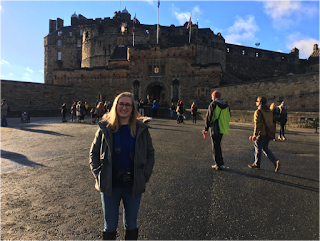
Edinburgh, Scotland: Edinburgh Castle


Until the winter of 2015, I did not think I would get the chance to study abroad. Like many other STEM majors, I was trying to balance a lot at one time: research, academics, a leadership role, volunteering, four minors, and somehow also my health. Life was going well for the most part, but I felt like science was all I ever did. I decided it was time for a break. I needed to do something I had always wanted to do while I had the chance; so, I decided to study abroad for one semester.

One day I was walking around the fifth floor of Heritage Hall when I saw a flyer for a study abroad experience in Scotland. I knew I had to go, and for three main reasons: my ancestry, my favorite hobby, and my desire to visit the Isle of Skye.

Besides being the home of my ancestors, Scotland is also one of the best places to pursue my favorite hobby: history! I am absolutely a history fanatic, and UAB does not offer history courses in one of my favorite topics, British medieval history. When I read the lists of medieval history courses offered by universities in Scotland, I became super excited. I was finally presented with the opportunity to learn about and discuss my favorite topic with people who cared about that topic in the country responsible for that topic! What could possibly be cooler than that?!
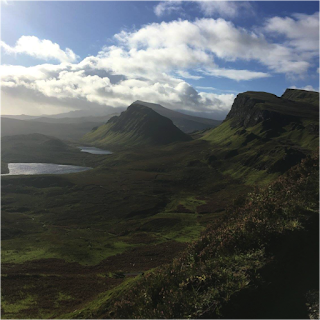
Quiraing, Isle of Skye, Scotland (I'm still amazed I actually took 
this picture. This just goes to show how beautiful Scotland really is)

The next steps were choosing the right program and preparing my application. The University of Stirling was my first-choice program two reasons. First, the program at Stirling is an exchange program, which means I paid the same tuition fees to study abroad as I would have paid to spend the semester at UAB. Second, Stirling is basically in the middle of Scotland and very accessible, making it easy to travel.

As for the actual process of applying for study abroad programs, it is very simple. All I had to do was create an account on the UAB Education Abroad website, fill out the requested documents, and meet with Ms. Megan Talpash to go over the other necessary steps. Once I was accepted to the University of Stirling, I began applying for study abroad scholarships. Once that was all done, I just had to wait for my departure date. On September 8, 2016, I flew to Scotland.

For the first month, I spent the weekends travelling, mostly within the bounds of Scotland. As someone who has travelled around continental Europe, I thought it was best that I got to know the country in which I was studying rather than trying to visit the rest of Europe; so, I went on adventures to Loch Ness, Inverness, Edinburgh, and the Shetland Islands to name a few. The greatest adventure of all of my trips was the weekend I spent on the Isle of Skye.

As I mentioned above, the Isle of Skye is one of the main reasons I chose to study in Scotland. A few years ago, I saw several pictures of the Isle of Skye on Pinterest. I was absolutely amazed at the stunning, rugged beauty portrayed and decided that I needed to visit such a magical-looking place. I spent my second weekend in Scotland driving and walking around the Isle of Skye, taking gorgeous pictures in the process. Those pictures serve as proof of the incredible scenery on the Isle of Skye, which is, in my opinion, the most beautiful place in the world. I encourage you all to visit some day.

Stirling, Scotland: Stirling Castle and adjoining graveyard


After a month of travelling around Scotland, I began to explore more of Stirling. I also became involved with the fencing club, one of the many athletics clubs at the University of Stirling. I had never fenced before but had always wanted to do so. With the encouragement of one of my flatmates (also a study abroad student), I became a fencer. Not only was the sport great fun, the people were so kind! Though I was a beginner, everyone in the fencing club was very encouraging and always willing to lend a helping hand, a common trend across the entire university.

Travelling and joining the fencing club were great experiences, but the most important part of my entire study abroad experience was the people I met. My flatmates, classmates, and the fencing club members were all wonderful people, and many of them have become some of my dearest friends. It was those wonderful people who made my entire study abroad experience so memorable and fun. There is no doubt that, while Scotland is stunningly beautiful and full of history and things to do, I would not have had the time of my life were it not for the people I met.
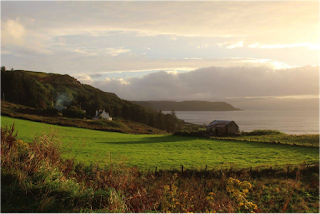
Uig, Isle of Skye, Scotland
Overall, my study abroad experience was absolutely incredible. There is no way it could have been any better than it was. I made new friends, picked up a new sport, indulged in one of my favorite hobbies, visited the land of my ancestors, and grew as a person. That last point is one of the biggest reasons why I think study abroad is such an invaluable experience: it helps you to learn more about yourself and grow as a person. Just generally travelling also helps one to learn about his- or herself, but, as someone who has travelled a lot, I strongly believe actually living somewhere helps you to grow in a different way because it is a different type of experience. No vacation or backpacking trip compares to actually living in a different country and culture.

I was asked to also comment in this article on whether or not my study abroad experience changed my undergraduate experience. I would like to say that it completely altered my undergraduate experience. Studying abroad led me to change part of my post-graduation plans.
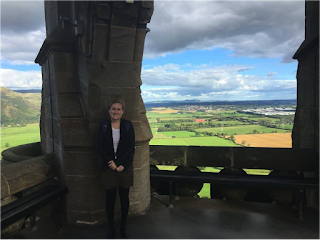
Stirling, Scotland: At the top of Wallace Monument

Spending a semester away from science allowed me to step back and think hard about what I want to do with my life and what will make me happiest in the long run. A few months before leaving for Scotland, I decided to delay my medical school applications for one year in order to pursue a super cool master’s program in neuroscience. My experience abroad made me more comfortable with that decision and provided assurance that I am moving along the right career path. Living in Stirling specifically made me realize that I do not feel at home anywhere in the world as much as I do in Scotland; so, I will be moving back to Scotland after completing my master’s degree and only applying to medical schools in Scotland. This is a massive change from the ultra-organized and planned out person I was before studying abroad; but, in the end, life happens, people change, and things do not work out as they are planned, which is perfectly okay. It’s the unexpected events that make life so fun and worth living.

In conclusion (kudos to you folks who have made it this far), STEM majors can study abroad, and they should. I am a STEM major who studied abroad, and it was possible because I completed all but one of my major classes and most of my thesis before senior year. I had designated senior year as the time to complete all of my minors, but I decided that learning about physics, biology, and psychology are all things I can do later; you only get one chance to study abroad, and that is your university years. I could not pass up the opportunity, so I dropped three of my four minors and made the time to study abroad.

So, for all of you undergraduate students reading this article, my advice to you is this: study abroad, and while you’re at it, step out of your comfort zone, try things you’ve never done before, go on adventures, and don’t be afraid to make friends. It just might change your life! Also, if you’re going to study abroad, try mixing things up a bit. Don’t take all science classes. Take some classes that have to do with the culture of the area in which you are studying. It will definitely enhance your experience. Going along those same lines, even if you do not study abroad, don’t be afraid to pursue areas of interest outside of science just because you want to be a scientist or physician (or both). We all know that science is fun, challenging, interesting, and rewarding, but it is not the only part of life that matters. In order to really appreciate life and all that it has to offer, you need to do more than just science. Just like blue is the best color in the rainbow, but it’s not the only one; you have to look at all of the colors to appreciate a rainbow’s beauty.

If you're interested in finding out more information about study abroad, please check out the UAB Education Abroad website!
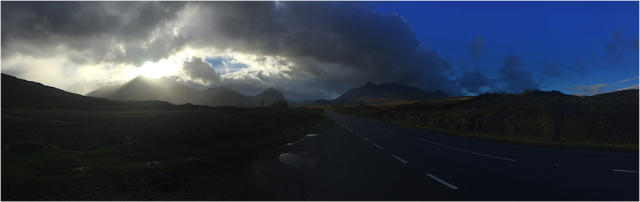
Isle of Skye, Scotland: The Cuillin (a mountain range in the south portion of the island)
Urquhart Castle on Loch Ness
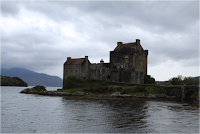
Eilean Donan Castle, Scotland
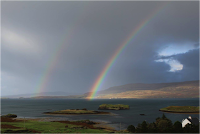
Glendale, Isle of Skye, Scotland: one of
four sets of rainbows I saw that day

Stanage Edge in the Peak District
 National Park in England
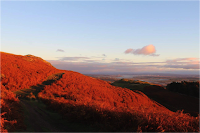
Stirling, Scotland: A walk up Dumyat
about 1 hour before sunset

Bigton, Shetland Islands: Beach to
St Ninian's Isle
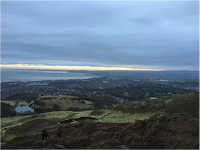
Arthur's Seat, Edinburgh, Scotland
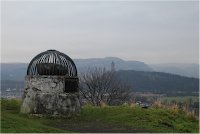
Stirling, Scotland: The Beheading Stone
on Gowan Hill with Wallace Monument
in the background
Stirling, Scotland: The bell tower from
the ruins of Cambuskenneth Abbey, where
King James III of Scotland is buried
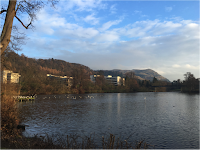
University of Stirling: Dormitories
with Dumyat (the big hill that is
actually a part of a mountain range)
in the background
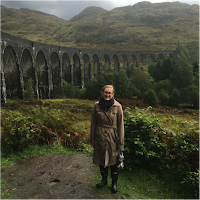
Glenfinnan, Scotland: Glenfinnan
Viaduct (where the Hogwarts Express
was filmed travelling to Hogwarts)
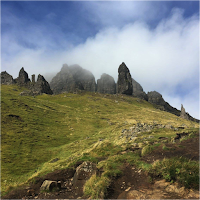
The Storr, Isle of Skye, Scotland
Sumburgh, Shetland Islands: an
Iron Age wheelhouse at Jarlshof,
an archaeological site dating
backto the Neolithic Period
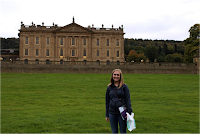
Bakewell, England: Chatsworth House
(The family home of Henry Cavendish,
the guy who determined the composition
of water and recognized hydrogen as an
element; also the location where the 2005
version of Pride & Prejudice was filmed)
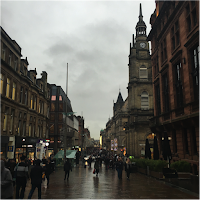
Glasgow, Scotland: Buchanan Street